Build a campsite shelter plan around space and setup
Compare tarps, vehicle awnings and enclosed shelters with a complete checklist for footprint, accessories and site suitability.
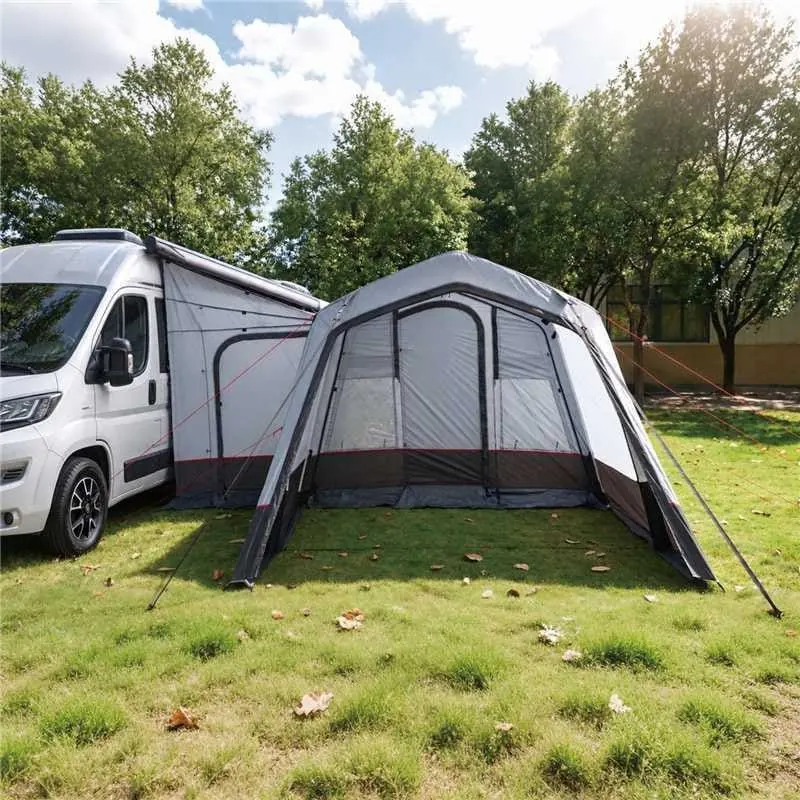
A campsite shelter should be chosen for a clear purpose: a shaded sitting area, a protected changing space or an additional covered area beside a vehicle. ESSE lists vehicle awnings and inflatable shelters, while Traveler Outdoor offers tarps and mosquito-canopy designs. Comparing those formats is easier when you first describe the campsite tasks you want the shelter to support.
Separate the shelter footprint from usable space
Request both packed dimensions and the full installed footprint. Ask which parts of the setup extend beyond the covered area, including any supports and anchoring arrangement specified by the manufacturer. A product's nominal roof size does not tell you how much campsite space is required to install it correctly.
Draw the proposed arrangement with the vehicle, sleeping area, furniture and main walking routes. Check whether vehicle doors and storage compartments remain accessible. Make sure the chosen campsite permits the proposed setup and that the ground conditions are compatible with the manufacturer's installation requirements.
Compare three common approaches
A separate tarp can offer different arrangements, but you need a suitable support and anchoring plan for the exact product. A vehicle awning puts the covered area beside the vehicle, making vehicle compatibility and mounting instructions part of the selection. An enclosed or partly enclosed shelter adds walls and closures that should be evaluated for access, ventilation and the way you intend to use the space.
Do not assume that one format is inherently more weather-resistant than another. Ask for the operating limits and the full setup instructions for each shortlisted model. Consider how quickly your group can follow the required procedure when conditions change and whether the shelter remains appropriate for the site.
Check what is included
Compare complete kits. Record whether supports, straps, pegs, guy lines, pumps, sidewalls and bags are included or optional. For inflatable products, ask about compatible pumps, the recommended inflation procedure and replacement components. For vehicle-mounted products, request the exact bracket and mounting specification rather than assuming a generic accessory will fit.
Ask the supplier to separate fabric descriptions from finished-product performance claims. A fabric coating specification does not establish the performance of every seam, opening or assembled connection. Request documentation that applies to the actual model and configuration you intend to buy.
Plan everyday use and pack-down
Choose a layout that keeps access routes clear and makes ordinary tasks easy. Follow the product's instructions concerning heat sources, cooking and ventilation; do not treat a shelter as a suitable cooking enclosure merely because it provides cover. Consider where wet components can be dried after the trip and how they should be stored.
- Confirm the complete installed footprint and usable covered area.
- Check campsite rules and the suitability of the intended ground.
- Match every required accessory to the selected model.
- Read setup, operating-limit and pack-down instructions before travel.
- Arrange an appropriate alternative when the shelter cannot be used.
A useful shelter plan combines the right product with a realistic campsite layout and an understandable operating routine. Prioritize those details over broad labels such as heavy-duty or all-season when comparing quotations.
Help with your next purchase
Tell us your quantity, destination and requirements. Your request stays on this site.
Further reading
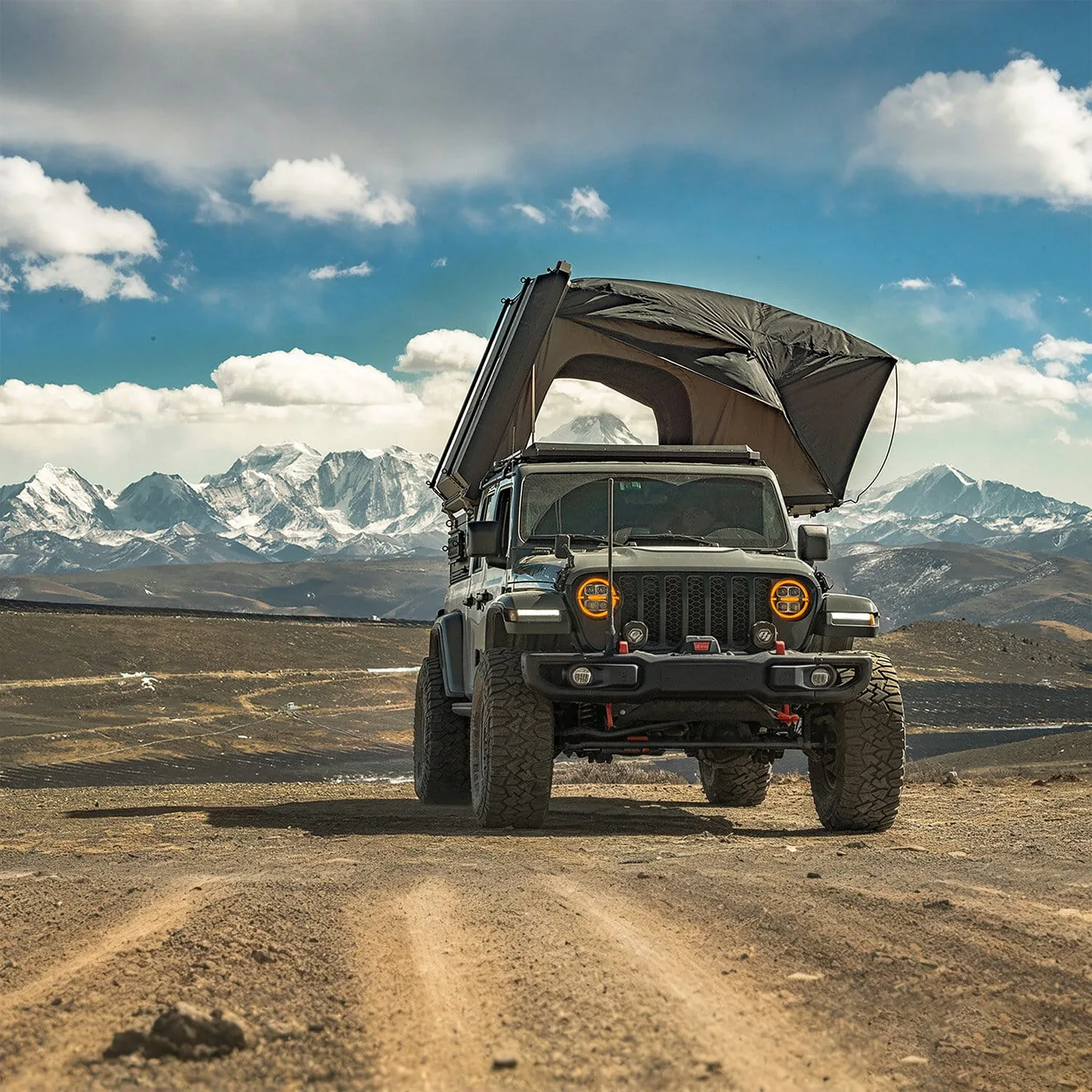
Choosing a rooftop tent starts with your vehicle
A practical fit checklist covering the vehicle, roof system, tent mounting, sleeping space and daily travel routine.
Read the guide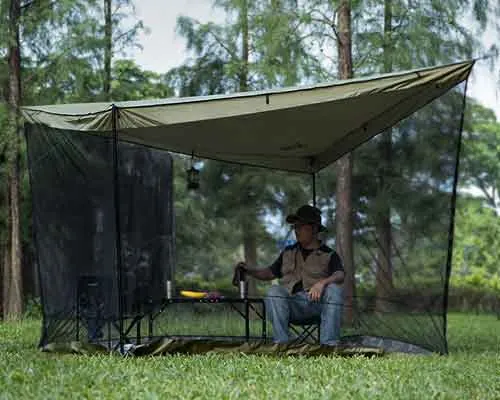
Hammock, bug net or complete shelter: what do you need?
Compare separate components and integrated hammock shelters by sleeping space, coverage, pack size and documented compatibility.
Read the guide
Outdoor furniture materials: compare the complete construction
Look beyond the surface finish to frames, joints, cushions, replacement parts and the maintenance your location requires.
Read the guide
Community feedback
Have experience with this product? Share a useful detail with the community.